Teaching assistant at the joint workshop between Politecnico di Milano and Southeast University
Institution
City
Subject
Course Type
Audience
Students
Mode
Language
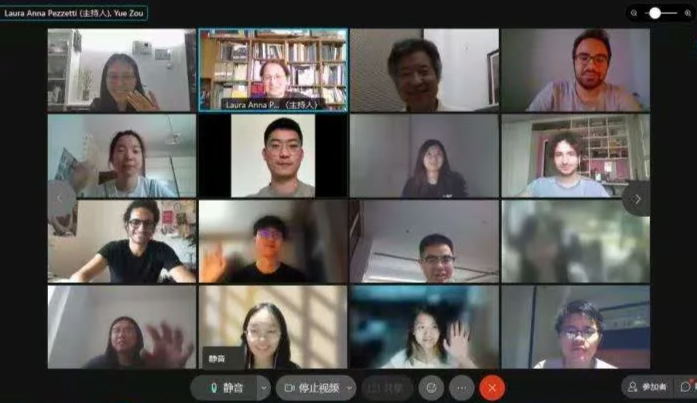
Qian Liu served as a teaching assistant for the Master’s level international workshop, ‘The Urban Regeneration Project for Ganzhou: Between City, Underground and Water’ in June 2021. This workshop was a joint collaboration between Politecnico di Milano, Italy, and Southeast University, China.
The workshop was conducted online due to COVID-19 travel restrictions. The participants were international Master’s students from various countries, including Italy, China, Spain, and Turkey, with a total of approximately 30 students. The language of instruction was English.
The workshop focused on architectural and urban design. The content centred on the urban regeneration of the historic centre of Ganzhou, China, mainly the Nanshijie (南市街) district. This involved connecting historical monuments such as the Confucius Temple, Buddhist temples, an old commercial street with historical courtyard residences, and an abandoned underground drainage system ‘Fu-shou Gou’ that dates back to the Song Dynasty (11th century).
Instruction emphasised reading and rewriting historical urban morphology and revitalising the emptied historical centre by producing high-quality urban public spaces and architecture that fits the urban context. Particular attention was given to the unique ancient drainage system, which students were encouraged to integrate into their design projects to rediscover and exhibit this historical structure.
Qian Liu’s responsibilities as a teaching assistant included supporting the professors (Prof. Laura Pezzetti and Prof. Li Bao) in facilitating the workshop and guiding the students in their design projects.
Throughout his involvement, Qian Liu’s overarching teaching philosophy guided his approach. This philosophy prioritises fostering students’ critical and creative thinking, encouraging proactive resourcefulness, and providing constructive feedback. He believes in facilitating active knowledge construction over passive information absorption and strives to create an inclusive and respectful learning environment that acknowledges the diversity of students’ backgrounds and learning styles.
Screenshot on the last day of the joint workshop, June 2021